Showing posts with the label Brute Force

Monday, 5 November 2018

Pentesting CMS : Wordpress Joomla Drupal


Pentesting CMS : Wordpress Joomla Drupal

Hello All, Today we will see how we can pentesting CMS like wordpress, drupal, joomla etc.

Sometimes we might get CMS based website or application to do perform VAPT. Pentesting CMS is just like a head ache, Because in CMS the back-end codes are mostly pre-defined as CMS nature and behaviour, Any one can download the CMS package and create his website or blog in seconds without knowing any knowledge of coding and extra skills.

So finally while Pentesting CMS we have to fight with the pre-define codes or you can Static code which id designed by experts like wordpress, drupal, joomla etc.

First of all we have to map our target for structured view. It will better if we crawl our target using different tools like Burp will be the great option, Apart from this we can use "dirb" present in kali linux which will brute force the URI and directory name for possible existence.



Tuesday, 3 July 2018

Attacking JSON Application : Pentesting JSON Application


Hello all, Its quite long time i have dosn`t updated my blog. So  here we go.


Today we will see how we can pentest  JSON Web Application.

Note- Some of the methods are taken from third party resources and some are presented as my personal experience.

First What Is JSON According To JSON Website.

JSON (JavaScript Object Notation) is a lightweight data-interchange format. It is easy for humans to read and write. It is easy for machines to parse and generate. It is based on a subset of the JavaScript Programming Language, Standard ECMA-262 3rd Edition - December 1999

"In a lemon language JSON is typically used Javascript to pass the parameter". Like Below HTTP Request.

GET /site/getuserinfo=narendrabhati HTTP/1.1
Host: websecgeeks.com
User-Agent: Mozilla/5.0 (Windows NT 6.1; Win64; x64; rv:44.0) Gecko/20100101 Firefox/44.0
Content-Type: application/json;

Saturday, 30 June 2018

Bypass Rate Limit Brute Force Protection Login Attempt Protection Captcha Bypass

Bypass Rate Limit Brute Force Protection Login Attempt Protection Captcha Bypass


Hello All While pentesting an application we might face some problem of  Brute Force Protection , Login Attempt Protection And Captcha Based Protection , So today we will see how can "Bypass Rate Limit Brute Force Protection Login Attempt Protection Captcha Bypass"

First of all we will not use any kind of ready made tools for this , So lets begin !

Many people will think that this is a small issue, But if we look closely an attacker point of view then we will came to know , that By Brute Forcing any login panel can allows an attacker to gain administrative privilege instead of looking for vulnerabilities like RCE , SQL Injection and other critical vulnerability which might also allow us to take the Root or Administrator Level access.

Here i am describing many different techniques which i have observed while pentesting or hunting bugs.


Tuesday, 26 September 2017

Yandex IMAP Brute Forcing(No Rate Limit For Login Attempts)

Hello Guyzssss,

I am not in bug bounty so much, But while using one of the yandex service, I found that there was no Rate Limit Deployed for login attempts on their IMAP Authentication.

Means user can perform multiple attempts on their IMAP Service, Which is responsible to access yandex mail on other accounts.Just like others.

Like gmail users can import yandex emails(Account) using IMAP Authentication.

Sunday, 23 April 2017

Pentesting Node.js Application : Nodejs Application Security

Pentesting Node.js Application : Nodejs Application Security

Pentesting Node.js Application : Nodejs Application Security

Hello folks, Today we will see how we can do Pentesting Of NodeJS Application : Attacking NodeJS Application.

As we know that Javascript is a very common and important language and also a light wight which do our most of task very easily.

But we also know that, Great efficiency comes with great risk. Node JS is a kind of server side programming language derived from JS.

According to Wiki

Node.js is an open-source, cross-platform JavaScript run-time environment for executing JavaScript code server-side. Historically, JavaScript was used primarily for client-side scripting, in which scripts written in JavaScript are embedded in a webpage's HTML, to be run client-side by a JavaScript engine in the user's web browser. Node.js enables JavaScript to be used for server-side scripting, and runs scripts server-side to produce dynamic web page content before the page is sent to the user's web browser. Consequently, Node.js has become one of the foundational elements of the "JavaScript everywhere" paradigm,[4] allowing web application development to unify around a single programming language, rather than rely on a different language for writing server side scripts.


Today we will see some of the vulnerabilities which can be exploited in Node.JS application. We will also take a look on the source code for better understanding.

Tuesday, 11 April 2017

Slack Rate Limit Bypass

Slack Rate Limit Bypass

Slack Rate Limit Bypass


First of all, Thanks to all readers for the appreciation got in my inbox.

Today we will see, How i was able to Bypass The Rate Limit Implemented In Slack for preventing automated/brute force attempts.

Rate limit is now days a very common things, They can be found every where.Usually rate limit are deployed to prevent automated and brute force attempts, Such as brute forcing OTP (One Time Password) & User Account Passwords. 

From recent months, I was working on Slack Bug Bounty Program and y god grace got more then 15 valid vulnerabilities till today(Some of the still in fixing stage). One of the interesting vulnerability was Slack Rate Limit Bypass. 

First of all, I was reported  No Rate Limit Implemented Vulnerability On Slack(Which was not true) :p In slack Mobile Applications End-Point "/api/auth.signin" , I was looking for positive response from slack guys, Next day slack replied that my report is not proper as they have rate limit implemented. Now what was wrong?

Monday, 10 April 2017

Hacking SNMP Service Part 1 - The Post Exploitation : Attacking Network - Network Pentesting


Hacking SNMP Service Part 1 - The Post Exploitation : Attacking Network - Network Pentesting

Hacking SNMP Service Part 1 - The Post Exploitation : Attacking Network - Network Pentesting


SNMP (Simple Network Management Protocol)

Simple Network Management Protocol (SNMP) is a popular protocol for network management. It is used for collecting information from, and configuring, network devices, such as servers, printers, hubs, switches, and routers on an Internet Protocol (IP) network.

With lots of usability, SNMP can be used by an attacker to compromise the services and IT infrastructure as well. which will cover later.


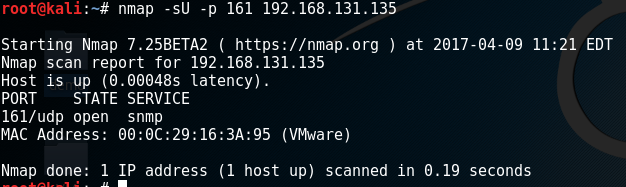
Now we will see how we can brute force the SNMP Services Community Strings.


But Why Crack SNMP Community Strings

The SNMP Read-Only Community String is like a user id or password. It is sent along with each SNMP Get-Request and allows (or denies) access to a router's or other device's statistics. If the community string is correct, the device responds with the requested information. If the community string is incorrect, the device simply ignores the request and does not respond.


What We Can Do By Community Strings.

Default community strings are "public" & "private" with "ro" (Read Only) & "rw" (Read & Write).
As it clear indicates, that Read only means user can only read the information & Read and Write means user can write/update the information present in SNMP.

Monday, 10 April 2017

Hacking SNMP Service Part 2 - The Post Exploitation : Attacking Network - Network Pentesting


Hacking SNMP Service Part 2 - The Post Exploitation : Attacking Network - Network Pentesting

Hacking SNMP Service Part 2 - The Post Exploitation : Attacking Network - Network Pentesting

From our previous post, We have identified the community strings Via Nmap Scan & Brute Forcing the Community String Values.

Now we will see, How can we use those Extracted Community strings for Post Exploitation.

To perform We will use various tools as mention below.

What Is MIB in SNMP

The SNMP Management Information Base (MIB) is a database containing information
usually related to network management. The database is organized like a tree, where
branches represent different organizations or network functions. The leaves of the tree
(final endpoints) correspond to specific variable values that can then be accessed, and
probed, by an external user. To read more about the MIB tree, refer to the following


For example, the following MIB values correspond to specific Microsoft Windows
SNMP parameters.
1.3.6.1.2.1.25.1.6.0        System Processes
1.3.6.1.2.1.25.4.2.1.2     Running Programs
1.3.6.1.2.1.25.4.2.1.4     Processes Path
1.3.6.1.2.1.25.2.3.1.4     Storage Units
1.3.6.1.2.1.25.6.3.1.2     Software Name
1.3.6.1.4.1.77.1.2.25      User Accounts
1.3.6.1.2.1.6.13.1.3        TCP LocalPorts


Sunday, 9 April 2017

Default Credentials Vulnerability : Attacking Network - Network Pentesting


Default Credentials Vulnerability : Attacking Network - Network Pentesting


Default Credentials Vulnerability : Attacking Network - Network Pentesting


Hello reader, We have talked lots of about Web Hacking & today i decided to blog some intresting things about Attacking Network - Network Pentesting.

For your information, for demonstration purpose i am using Vyatta VM, which you can also download from http://packages.vyos.net/iso/release/1.1.7/ 

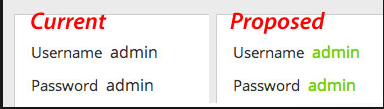
Today we will see the common vulnerability which most of admin do, by keeping default configuration or you can also say keeping default credentials.

So we have a Target machine on 192.168.131.135 & our Attacking Machine on 192.168.131.134

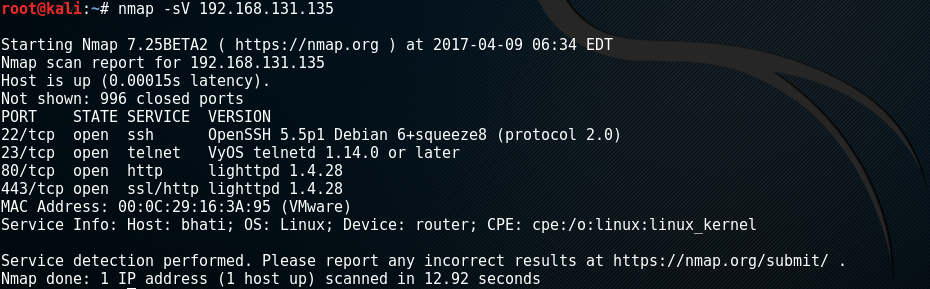
Lets do a Nmap Service Scan on our target machine.

nmap -sV 192.168.131.135 

Default Credentials Vulnerability : Attacking Network - Network Pentesting


So we got some information like port 22, 23, 80 & 443.
Apart from all port, 22 & 23 looks interesting for us and it might possible that credentials would be default for that service. 

Sunday, 9 April 2017

Cracking SSH FTP HTTP FTP : Attacking Network - Network Pentesting


Cracking SSH FTP HTTP FTP : Attacking Network - Network Pentesting

Cracking SSH FTP HTTP FTP : Attacking Network - Network Pentesting

Apart from using Default Credentials, we can also perform a brute force attack on various services to get into them.


1) HTTP (htaccess protected web directory) 

Medusa comes in rescue when we talk about Basic Authorization or Password Protected Web Directory Cracking

Medusa commmand line to For Cracking Basic Authorization or Password Protected Web Directory

 medusa -h 192.168.11.219 -u admin -P Desktop/demo/password -M http -m DIR:/secret-T 10


Medusa will go ahead and try Crack Password Protected Web Directory by using user as admin and password as provide in password list on Password Protected Web Directory secret. 

Sunday, 15 May 2016

Web2py Vulnerabilities 2.14.5 : LFI,XSS,CSRF,Brute Force Attack

Web2py Vulnerabilities 2.14.5 : LFI,XSS,CSRF,Brute Force Attack

Web2py Vulnerabilities


This post is about Web2py  Vulnerabilities which we have found, POC`s are created under Mac OS X EI Capitan, But also tested on windows 7 as well as linux platform.

#Download the vulnerable Apphttps://drive.google.com/file/d/0B-LjC3oY6tUpZlNkV3BnZU85Y0E/view?usp=sharing
# Exploit Title : Web2py 2.14.5 Multiple Vulnerabilities LFI, XSS,CSRF, Brute Force On Login
# Reported Date : 2-April-2016
# Fixed Date : 4-April-2016
# Exploit Author : Narendra Bhati
# CVE ID : LFI - CVE-2016-4806 , Reflected XSS - CVE-2016-4807 , CSRF - CVE-2016-4808, Login Brute Force - CVE-2016-10321
# Tested On : MAC OS X EI Capitan, Windows 7 64 Bit, Most Linux Platforms.
# Fix/Patching : Update To Web2py. 2.14.6
# Facebook : https://facebook.com/imnarendrabhati
# Twitter : http://twitter.com/imnarendrabhati

Sunday, 16 February 2014

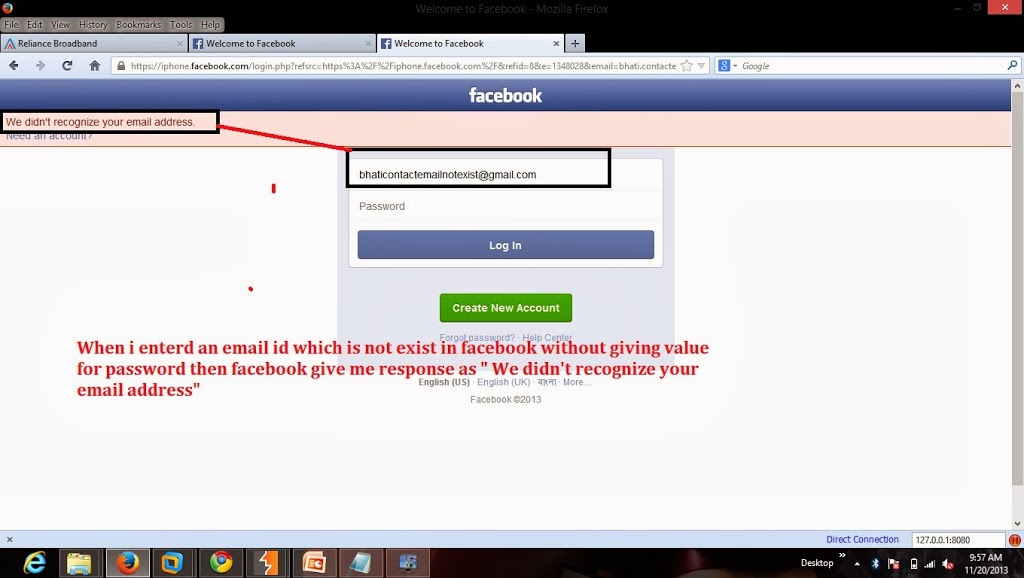
Facebook User Enumeration Vulnerability By Bypassing Brute ForceProtection


Facebook User Enumeration Vulnerability By Bypassing Brute ForceProtection


                                    Facebook User Enumeration


Hello all readers today i am going to show you that how i got user enumeration vulnerability in facebook "Facebook User Enumeration" Vulnerability
==============================

Bug Status - Reported On 3-5-2013

They said that rate limit is working according to their settings , but they reward me for co-coordinating with them about this report

Reward - $1000

Sunday, 1 December 2013

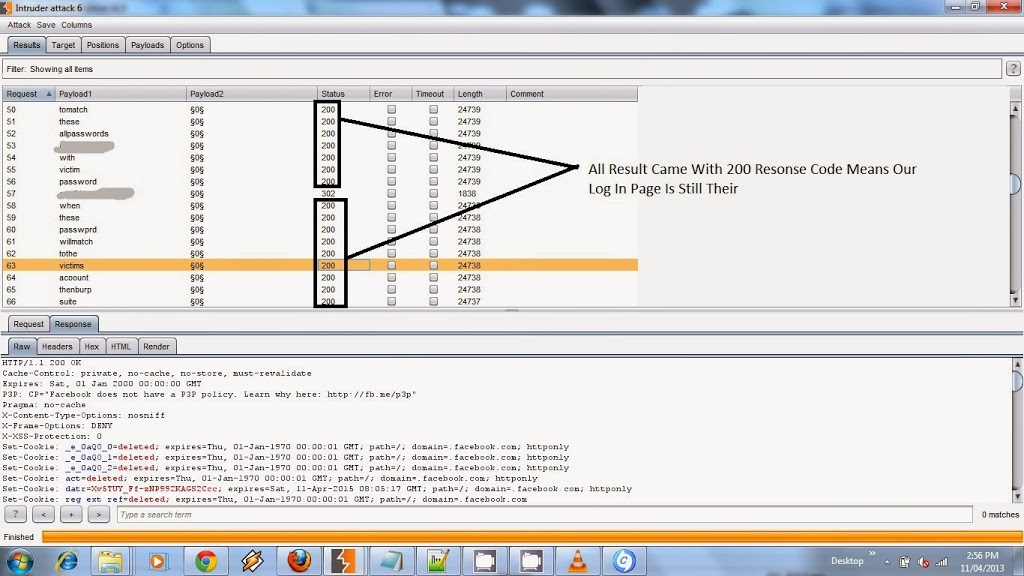
Facebook Brute Force Attack Vulnerability


Facebook Brute Force Attack Vulnerability


Welcome back all l33ts :-)

Today i am going to show you that how i got Brute Force Attack Vulnerability in Facebook "Facebook Brute Force" Attack Vulnerability ( Reported On 11-4-2013 ) 

first we have to know that what is Brute force attack vulnerability 

According to OWASP  

A common threat web developers face is a password-guessing attack known as a brute force attack. A brute-force attack is an attempt to discover a password by systematically trying every possible combination of letters, numbers, and symbols until you discover the one correct combination that works. If your web site requires user authentication, you are a good target for a brute-force attack etc. :-)

So lets move to the interesting part

Wednesday, 27 November 2013

"Sourceforge Brute Force" Attack Vulnerability ,Sourceforge Brute Force

"Sourceforge Brute Force" Attack Vulnerability ,Sourceforge Brute Force


                                         Sourceforge Brute Force Attack Vulnerability

I want to share my finding "Sourceforge Brute Force" Attack Sourceforge.com which I have reported to Source Forge Security Team on 25th October 2013


While downloading a project i think that i should test the log in panel for brute force attack vulnerability On - https://sourceforge.net/account/login.php


After some analysis i have found that the there was no protection of login attempts or you can say Brute force attack ..


So i test the source forge log in panel i found something interesting.In my test i have tested 100 something attempts with my account bhati.contact@gmail.com